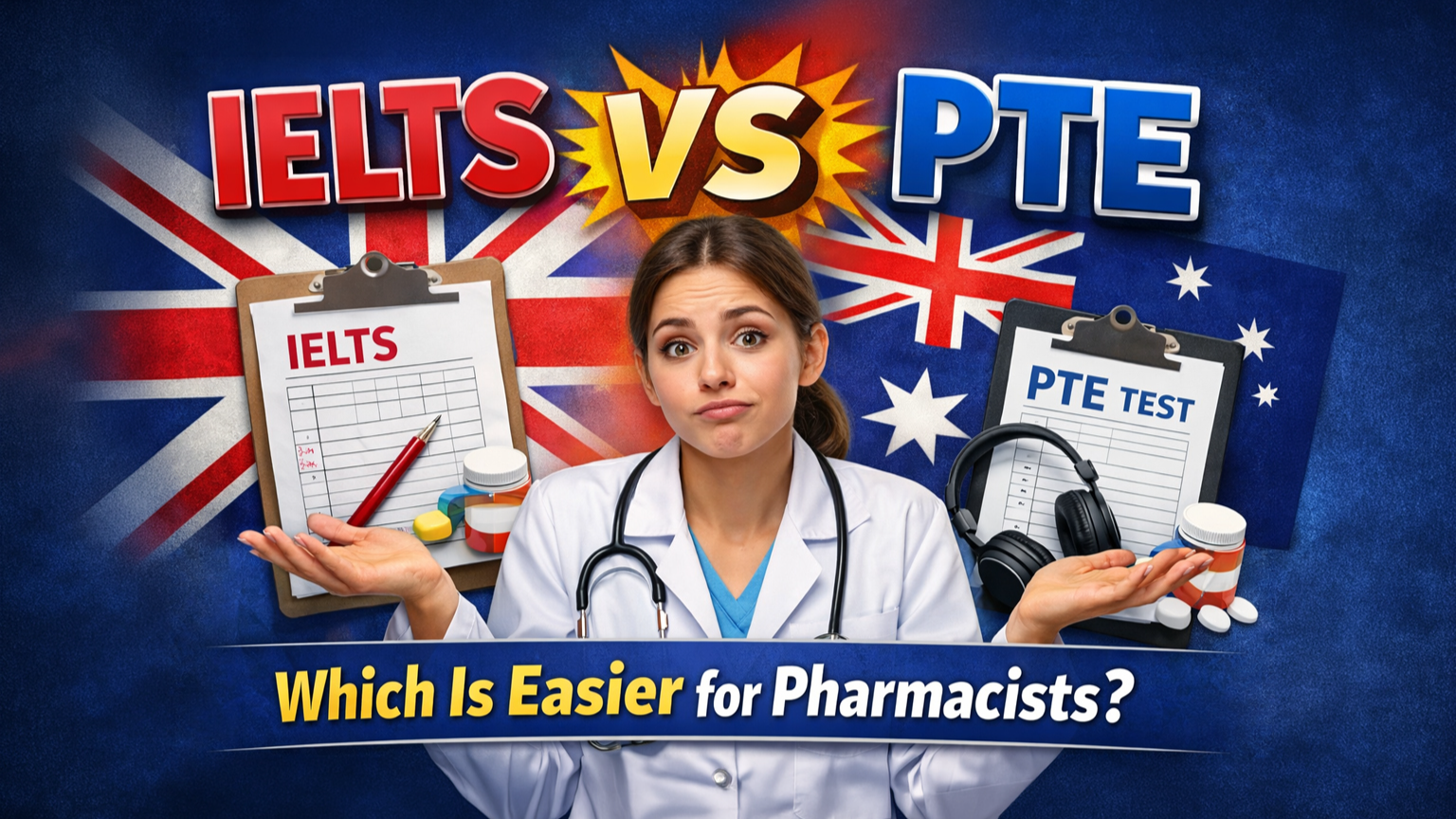
IELTS and PTE top the list of go-to English tests, leaving many pharmacists puzzled over which feels simpler. The true answer hinges on your personal strengths, familiarity with technology, and the specific criteria of your target country or regulatory body.
IELTS (International English Language Testing System) is a well-established exam widely recognized by global healthcare boards and immigration offices. It assesses four skills: Listening, Reading, Writing, and Speaking. You can opt for paper or computer-based IELTS, based on your test centre’s options. A standout aspect is its face-to-face Speaking test with an examiner—some pharmacists prefer this personal touch, while others get jittery in real-time interviews.
- Score scale and equivalence: "IELTS uses a 0-9 band scale per section (overall average reported), where pharmacists typically need 7.0+ for most licensing bodies like Australia's AHPRA."
- Test length and structure: "The full test lasts 2 hours 45 minutes, with fixed sections: Listening (30 min), Reading (60 min), Writing (60 min), and Speaking (11-14 min, scheduled separately)."
- Global reach specifics: "Over 12,000 organizations accept it, including key pharmacy regulators in UK (GPhC), Canada (PEBC), and New Zealand."
- Prep familiarity: "Its academic-style Reading passages often cover science/health topics familiar to pharmacists, easing preparation."
PTE (Pearson Test of English) is an entirely computer-delivered test, with every section—including speaking—handled and graded by automated software. You record your responses via microphone rather than conversing with a live examiner. PTE features combined tasks, like listening to a lecture and writing a summary right after. Test-takers often like its sleek design, speedy scores, and consistent grading. That said, the quick tempo demands strong computer skills and fast typing.
· Score scale and equivalence: PTE uses a 10-90 scale across all skills (granular scoring), where pharmacists often target 65+ for equivalency to IELTS 7.0, as required by bodies like Australia's AHPRA.
· Test length and structure: The full exam runs 2 hours, fully integrated: Speaking & Writing (54-67 min), Reading (29-30 min), Listening (30-43 min)—no separate scheduling.
· Global reach specifics: Accepted by over 3,500 organizations, including pharmacy regulators like UK GPhC, Canada PEBC, Australia AHPRA, and New Zealand MPCNZ.
· Prep familiarity: Reading tasks like fill-in-the-blanks align with pharmacists' quick scanning of drug info or research abstracts, making them intuitive.
Pharmacists should weigh their everyday skills and preferences when picking the easier test. If you're accustomed to scanning research papers, drafting reports, and conveying tricky details crisply, IELTS's Writing and Reading may feel more intuitive—their classic format mirrors your routine professional duties. Conversely, if tech comes naturally, you jot notes swiftly, and prefer snappy, targeted challenges, PTE's approach might suit you better.
Speaking often tips the scales for pharmacists. Those who get stage fright facing an examiner may favour PTE, where you talk into a computer from a quiet cubicle, easing the mental strain. Yet, some struggle to sound genuine without a human listener, and nearby test-takers' chatter can distract. If you thrive in genuine chats and handle scrutiny coolly, IELTS Speaking might come across as simpler and truer to life.
Practical considerations play a crucial role as well. Verify which test your target pharmacy council, licensing authority, or immigration body recognizes, along with their minimum score thresholds. Factors such as test availability, examination fees, proximity to the test center, and average result turnaround time should guide your decision. Ultimately, the most "accessible" option may simply align best with your schedule and confirmed acceptance for your intended pathway.
Ultimately, no single test—IELTS or PTE—is universally simpler for pharmacists. The smartest move is to complete a full practice version of each, assess your stress levels and pacing, and note which yields your stronger score. Select the one that plays to your abilities and maximizes your odds of hitting the target score for your career aspirations.